

March 04 2025
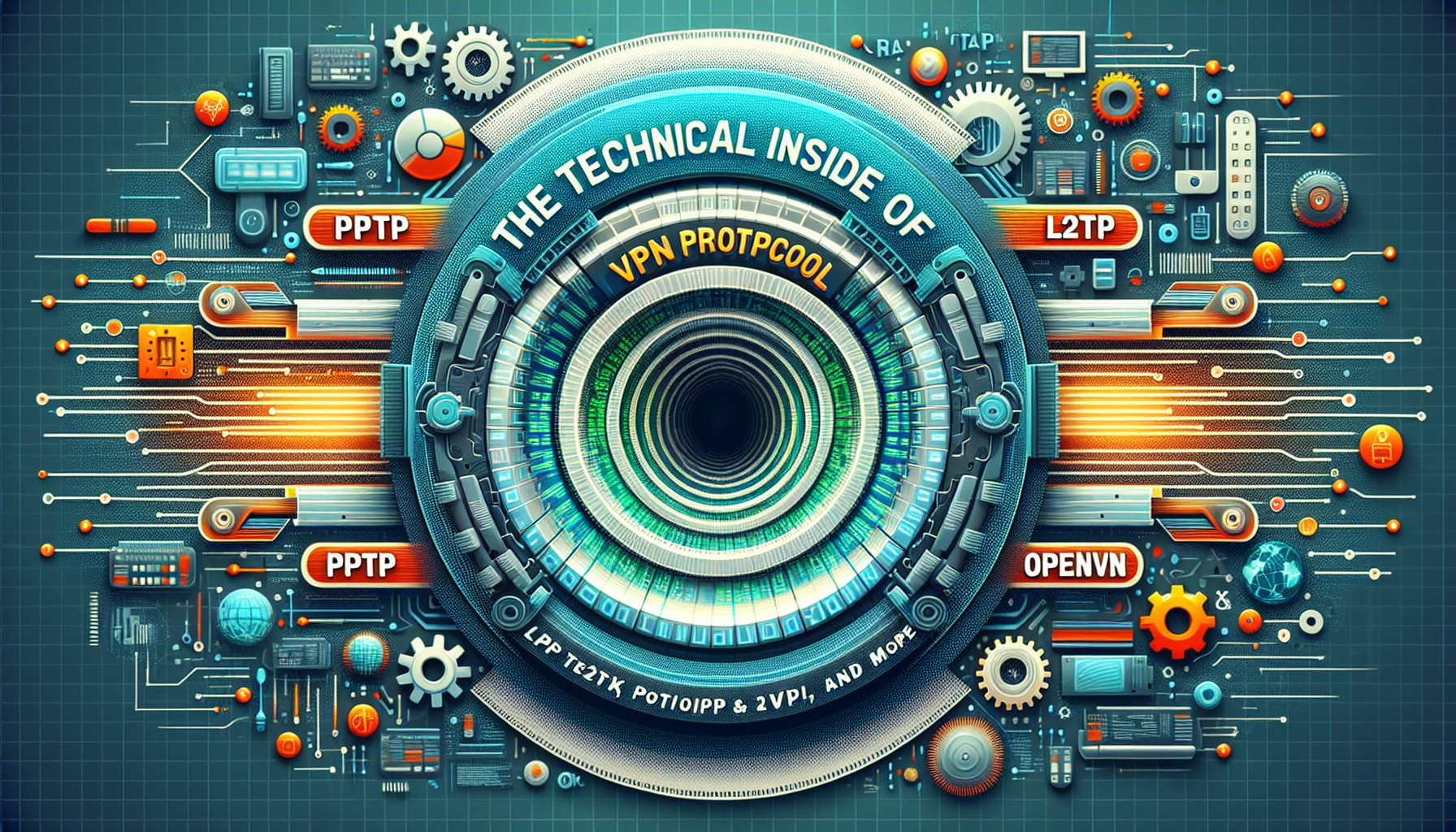
Virtual Private Networks (VPNs) have become an essential tool for many internet users around the world. They provide a secure and private connection over the internet, protecting your data from prying eyes. The security and privacy offered by a VPN are primarily achieved through the use of VPN protocols. In this article, we will delve into the technical aspects of various VPN protocols including PPTP, L2TP, OpenVPN, and more.
Let's start with PPTP (Point-to-Point Tunneling Protocol). Developed by Microsoft, PPTP is one of the oldest VPN protocols. It creates a tunnel and encapsulates the data packet, then encrypts the encapsulated data packet using a 128-bit key. Despite its age, PPTP is still widely used due to its simplicity and speed. However, it has several security vulnerabilities and is not recommended for sensitive data transmission. Some VPNs like still offer PPTP as an option, but they usually recommend other, more secure protocols.
Next is L2TP (Layer 2 Tunneling Protocol). L2TP doesn't provide any encryption by itself. Instead, it is often combined with IPsec (Internet Protocol Security) to secure the data. The combination, known as L2TP/IPsec, provides robust security, but it can be slower than other protocols due to double encapsulation. L2TP/IPsec is commonly used in VPNs like for its balance between security and speed.
OpenVPN is a newer and more secure protocol. It uses the open-source OpenSSL library to provide encryption, which can be configured to use either 160-bit or 256-bit keys. OpenVPN supports both TCP (Transmission Control Protocol) and UDP (User Datagram Protocol), offering a good balance between speed and reliability. It is highly configurable and can bypass most firewalls, making it a popular choice for many VPNs, including .
There are also other VPN protocols like SSTP (Secure Socket Tunneling Protocol), IKEv2 (Internet Key Exchange version 2), and WireGuard. SSTP, like PPTP, was developed by Microsoft. It uses SSL (Secure Sockets Layer) 3.0 for security and can bypass most firewalls. IKEv2 is a protocol that provides high speed, security, and stability, especially for mobile users who often switch between WiFi and mobile data. WireGuard is a newer protocol that aims to provide better performance and security than existing protocols.
In conclusion, the choice of VPN protocol can significantly affect your VPN's performance and security. While PPTP and L2TP/IPsec may be suitable for general browsing, OpenVPN and newer protocols like WireGuard provide better security and are more suitable for sensitive data transmission. When choosing a VPN, it's important to consider what protocols they offer and choose one that fits your needs.